Why Trump’s “Board of Peace” is a harmful idea
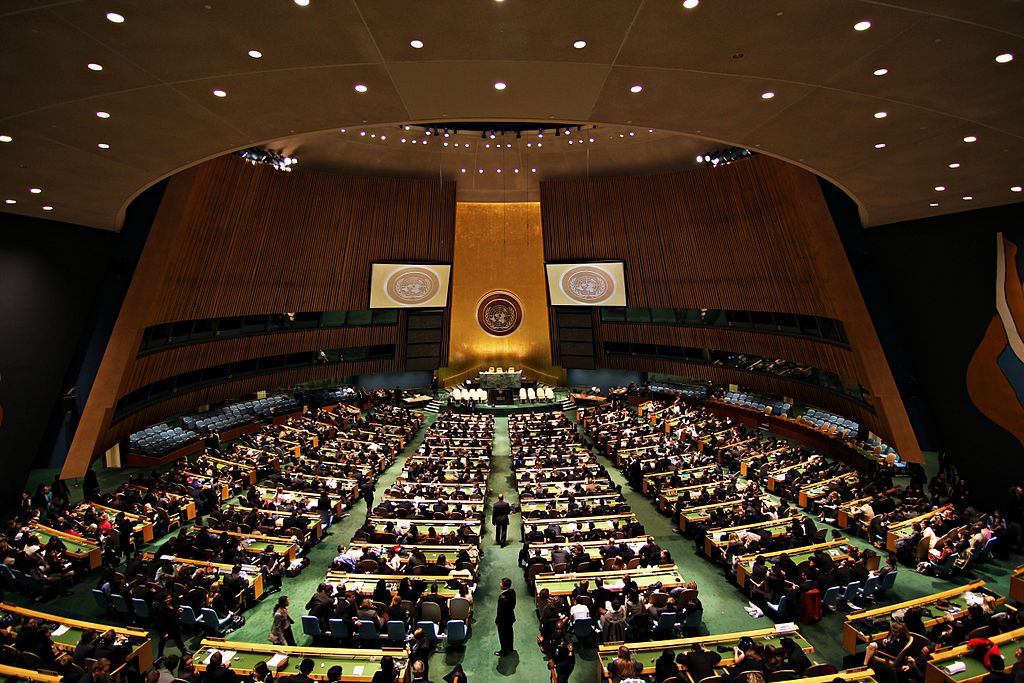


The idea of establishing a Board of Peace promoted by the United States under the aegis of the Trump administration, with the tycoon himself self-appointed as its president, is not merely questionable on political grounds – it is profoundly flawed from both a historical and an institutional perspective. Not because peace does not deserve new tools, but because this tool is conceived in open opposition to the multilateral system built after the Second World War and consolidated in the following decades, and it does so through a unilateral act that undermines that system’s very foundations.
The United Nations are not a simple diplomatic forum nor an abstract body. They are the outcome of a deliberate choice made by states after 1945 – namely, to voluntarily limit part of their sovereignty in order to prevent power politics from once again producing systemic wars. That compromise – which sometimes seems imperfect, at other times slow, often frustrating – is the core of contemporary multilateralism. Creating a parallel body, decided upon and funded unilaterally, means calling that very agreement into question.
The issue is not merely symbolic. The simultaneous cut in funding to the United Nations, coupled with the allocation of resources to this new Board of Peace, makes the operation even more serious. What we are witnessing is not a “strengthening” of peace instruments, but their selective replacement – the shared system is weakened while a structure that answers to a single political vision is financed. The message is clear – multilateralism is acceptable only as long as it does not obstruct national interest.
This approach ignores the true nature of the UN system. The United Nations are not only the Security Council. They are a complex ecosystem made up of specialized agencies, Special Rapporteurs, thematic groups, field missions, monitoring mechanisms, and spaces for dialogue that allow states to communicate even when bilateral diplomacy is blocked. It is precisely this complexity that has made it possible, in recent decades, to keep channels open even at moments of the highest international tension.
Multilateralism is not an abstract moral value – it is a practical tool for managing conflicts. It works slowly, often poorly, but it works because no one fully owns it. Dismantling it or hollowing it out from within does not make the world safer, nor does it make dialogue more effective. Instead, it creates greater instability and insecurity, by delegating conflict resolution to a few actors who are often driven by their own interests.
Moreover, the issue does not concern only the United Nations, but all the other mechanisms that states have collectively established. Namely, the International Criminal Court, whose mandate has been repeatedly challenged in recent months, and the Council of Europe, which is facing attacks directed in particular at the rulings of the European Court of Human Rights.
If the real objective were peace, the path would be the opposite one – strengthening multilateral agencies, reforming their decision-making mechanisms, investing in their agencies, and making their conflict-prevention tools more effective. Not creating alternative bodies that respond to power politics and that, in the long run, further fragment global governance.
The Board of Peace is a step backward, rather than an innovation. And history has already shown us how dangerous it is to dismantle, piece by piece, the safeguards built to prevent force from once again replacing law and from becoming the only instrument available to states.