Who Decides What Is True? From Post-Truth to Newsfluencers


For a long time, the news ecosystem followed a fairly clear chain. Something happened, a journalist learned about it, investigated and verified the story, a decision was made as to whether it was newsworthy, it was published, and the public became aware of it. It was certainly far from a perfect system, and often highly centralised, but one in which there were recognisable actors, clearly defined responsibilities and professional rules.
That model no longer exists today. Or rather, it still exists, but it now has to contend with platformisation, which has radically changed the way we access information.
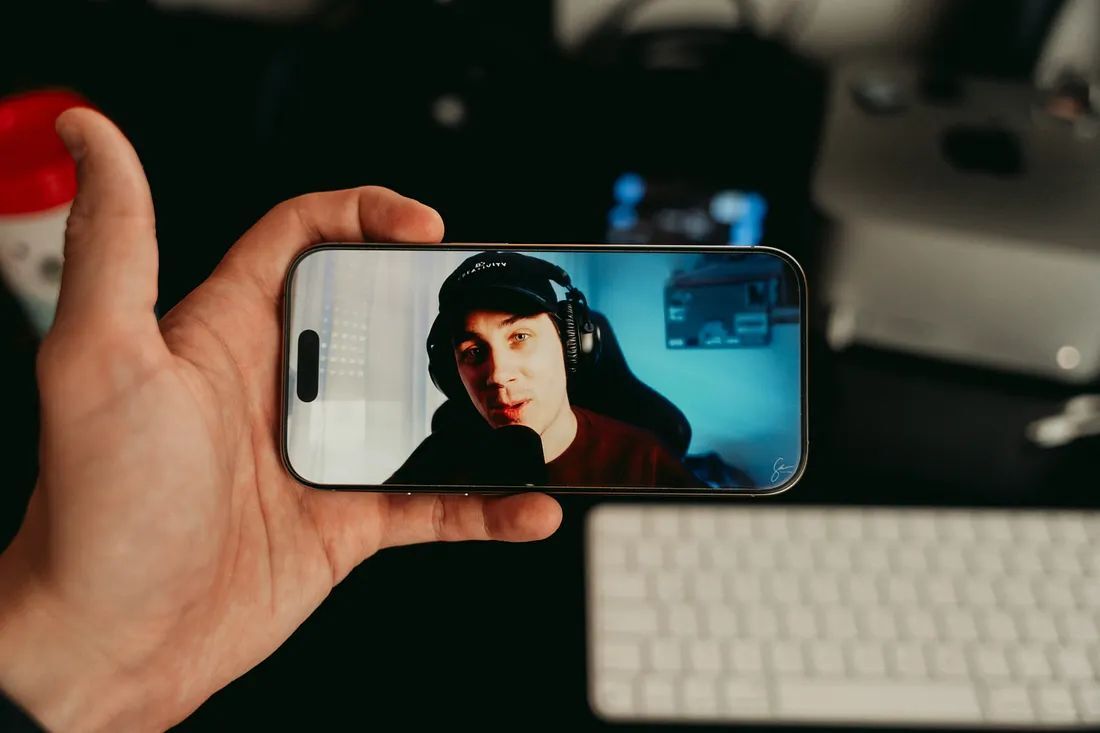
The Council of Europe’s new report, Shifting News Authorities and Democratic Resilience, starts precisely from this transformation, focusing on “newsfluencers”: creators, influencers and digital personalities who produce, comment on and amplify news, often reaching audiences far larger than those of traditional media.
This is an important change, but one that conceals an even deeper transformation: the source of authority.
A journalist’s credibility derives from expertise built over years of study and professional experience, careful verification of sources, editorial responsibility and the ethical standards to which they are accountable. A newsfluencer’s credibility, by contrast, stems primarily from their relationship with their audience and is built on perceived authenticity, familiarity, direct language and identification. We may trust the news they share because we trust them. But we do not necessarily know whether that news is actually true, whether it is presented objectively, or whether all aspects of it have been properly verified.
This marks an epochal shift: from the authority of the institution to the authority of the individual.
At the same time, it represents a further step beyond the era of “post-truth” associated with Trump. What matters now is no longer simply the true/false dichotomy. It is no longer merely a question of facts losing their centrality while repetition, emotion, identity and the ability to construct an alternative narrative gain importance. We have moved beyond the understanding that an assertion does not need to be proven true; it merely needs to be made credible to a segment of one’s audience.
The phenomenon described by the Council of Europe today suggests that the issue is no longer simply what is true, but who has the authority to determine what deserves to be regarded as true.
This is a substantial difference. While Trump-era post-truth challenged the authority of facts and of the institutions responsible for verifying them, the newsfluencer ecosystem also challenges the authority of those who select, verify and report those facts.
This does not mean that newsfluencers are necessarily a threat. They can reach people who no longer follow traditional media, especially younger audiences; they can make complex issues more accessible; they can build communities and give space to voices that struggle to find a place in mainstream media. In certain cases and contexts, they can also provide an alternative voice when the media are subject to political pressure.
The problem arises, however, when this new form of authority encounters the attention economy. We now know very well that platforms do not necessarily reward what is most accurate or most relevant to the public interest. Algorithms reward what attracts attention, in terms of views, interactions, shares and time spent engaging with content. And this, as we have repeatedly seen in recent years, can encourage oversimplification, conflict, outrage and intense polarisation.
This also represents a further step beyond the spread of fake news. A newsfluencer does not need to disseminate fake news in order to exert significant influence on democratic debate. It is enough to decide which issues deserve attention, which people should be listened to, and how an event should be interpreted. Platform algorithms can do the rest, giving increasing visibility to certain content while reducing the visibility of other content, thereby contributing to a distorted perception of reality.
This “transfer” of power between journalists and newsfluencers is far from irrelevant, as is the question: who decides today what becomes relevant? This form of power, once largely held by newsrooms, is now distributed among platforms, algorithms, creators, politicians, media outlets and online communities.
Efforts are being made to find ways of regulating this new landscape. In Europe too, an increasing number of rules seek to define when an influencer should be considered an actor within the media ecosystem, what obligations they should be required to meet, and how political communication should be made transparent. But the challenge is complex, involving an often fragile balance between ensuring accountability and transparency without undermining the right to freedom of expression.
Perhaps, then, the issue is not about choosing between journalists and influencers, but about understanding how to build an ecosystem in which creators’ ability to reach and engage new audiences can coexist with journalism’s standards of verification, transparency and accountability.
This is no small challenge, not least because of the way platforms operate and the objectives they pursue. Their goal is not to strengthen democratic values, but to maximise profits—an approach that often overlooks the need to rebuild the social conditions that sustain trust in truth, sacrificing authoritative and reliable sources in the process.